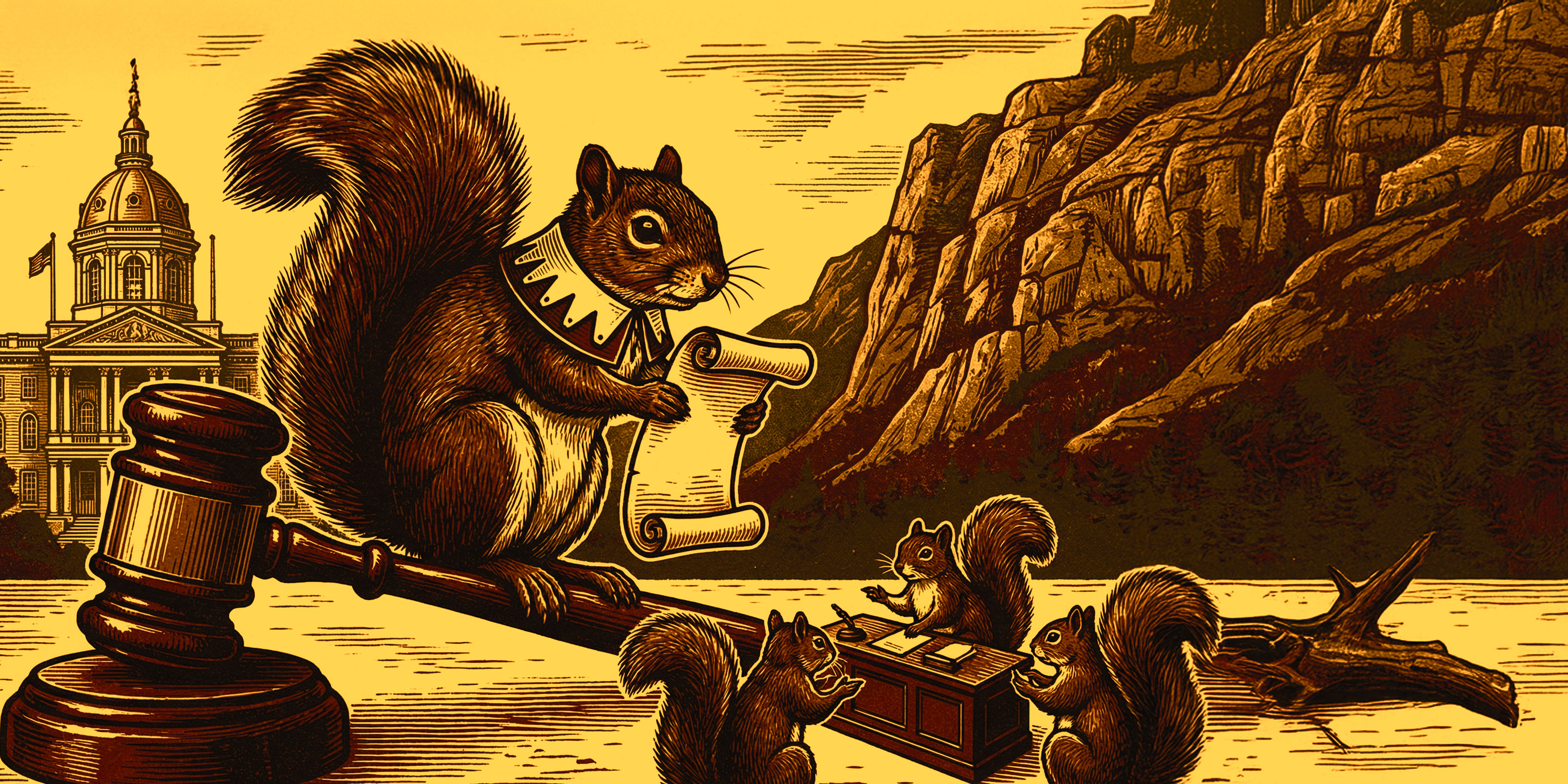
Clean Skies Push for New Hampshire
Dismissed previously as "misinformation," NH activists have re-armed with a complex three-bill strategy for 2026.
New Hampshire is now a key part of the national debate on atmospheric modification. After several failed tries to pass a broad ban on geoengineering, lawmakers are taking a new approach. For 2026, they have shifted from an all-or-nothing prohibition to a more focused, multi-part plan. This analysis explains how their efforts have evolved, from administrative oversight to today’s more complex debate.
The Pivot: From Public Notice to Outright Prohibition
Before 2024, New Hampshire managed atmospheric intervention mostly with administrative rules. That year marked a significant change. Reviewing the state’s legislative history shows why. Rather than simply repealing old weather modification laws and leaving no regulations in place, lawmakers first increased state oversight. Only then did they try for a full ban. This shift was a significant turning point and influenced later actions.
- In 2021, HB 128 improved state oversight by adding new transparency rules to the approval process. The law did not ban any activities. Instead, it required agencies to notify the public and share details about the chemicals and technologies used in weather modification experiments.
- In 2024, lawmakers introduced HB 1700, known as "The Clean Atmosphere Preservation Act." It was the first state bill to treat geoengineering, SRM, and SAI as pollution. The bill aimed to give the state greater control over its airspace by banning activities that sponsors deemed harmful to health, the environment, and security.
Why the “Clean Atmosphere” Model Failed (Twice)
The broad ban approach, first attempted with HB 1700 and then with a revised HB 764, failed in both the 2024 and 2025 sessions. These defeats reveal a clear pattern: lawmakers, budget worries, and public opposition all worked against this strategy from the start.
HB 1700 (2024) proposed a total ban on geoengineering and electromagnetic radiation. HB 764 (2025) was similar, but allowed cloud seeding during droughts. Both bills failed by wide margins in committee and on the House floor.
The Three Pillars of Rejection
Lawmakers and state agencies rejected these bills for three main reasons. These challenges shaped the debate and affected how lawmakers planned their next steps.
- Technical Scope and Enforcement Issues: The legislation faced immediate criticism due to its overly broad definition of polluting emissions, which included common forms of electromagnetic radiation, such as radio frequency and microwave radiation, used by cellular and 5G networks. This scope concerned the telecommunications industry, arguing it would affect regular infrastructure. An equally significant problem was the proposed enforcement by county sheriffs, who lack the necessary expertise, equipment, and authority to regulate high-altitude, technologically advanced interventions. These combined issues demonstrated that the bill's goals were not technically or administratively feasible. Although a subsequent bill included a drought exemption, it failed to address core enforcement and technology issues, prompting significant opposition.
- Financial Objections and Unfunded Mandates: A recurring obstacle to these bills has been the concern over new costs. While earlier versions were rejected as "unfunded mandates" because they burdened county sheriffs, the fiscal demands have only grown. The Environmental Services department previously cited the need for a compliance officer. For the 2026 proposal, the Department of Justice has added a request for significant legal support to manage the regulations. Lawmakers continue to object to these expenditures, keeping the "unfunded mandate" label at the centre of the debate.
- Scientific Discrediting and Intense Public Backlash: Scientific controversy proved fatal to the bills. The House Science, Technology, and Energy Committee dismissed both legislative attempts (HB 1700 and HB 764) for being founded on "misinformation" directly linked to "chemtrail" conspiracy theories.
A Tripartite Legislative Strategy
Sponsors have changed their approach for the 2026 session, learning from previous setbacks. They have reorganised their goals into three distinct bills, a notable departure from their former strategy. This new plan requires lawmakers to consider the debate's technical, prohibitive, and symbolic components individually. By separating these aspects, the sponsors aim to improve the likelihood of successfully passing some of the legislation.
- HB 1128, the “Emergency-Only” Compromise, limits cloud seeding to droughts and requires a 14-day environmental review, focusing on safety and transparency without controversial language.
- HB 1618, the “Hardline Ban,” mirrors previous failed bans and aims to prohibit Solar Radiation Modification (SRM) and Stratospheric Aerosol Injection (SAI) with felony penalties and a minimum fine of $500,000. While also seeking industry support by easing approvals for personal wireless service facilities, the bill's fiscal note reveals that its enforcement demands far exceed current state resources. The proposal to allow sheriffs to deputise and train citizen volunteers further highlights that the bill tasks local law enforcement with duties outside their typical expertise.
- HR 35 is a non-binding resolution against federal geoengineering, requiring the DES Commissioner to notify 27 agencies but having no legal or fiscal impact.
A Test of Legislative Viability
New Hampshire’s efforts to regulate atmospheric modification have shifted from broad bans to a more detailed, multi-part strategy. The 2026 plan carefully uses technical solutions (HB 1128) and symbolic actions (HR 35) to build support for a strict ban (HB 1618). This session will test both the bills and whether this combined approach can overcome significant institutional and budget challenges.
Will these bills finally break the deadlock, or will New Hampshire see another round of symbolic opposition to a technology that is still mostly theoretical?